
Numerique
Cloud Computing for SMEs: Benefits and Legal Risks to Know
In an economic environment that demands ever more agility and efficiency, cloud computing has established itself as an essential solution for SMEs. By providing on-demand access to IT resources, this technology profoundly transforms the way companies manage
Reading time:
7 min
In an economic environment that demands ever more agility and efficiency, cloud computing has established itself as an essential solution for SMEs. By providing on-demand access to IT resources, this technology profoundly transforms the way companies manage their data and applications. However, this model also raises significant legal questions that business leaders must master before getting started.
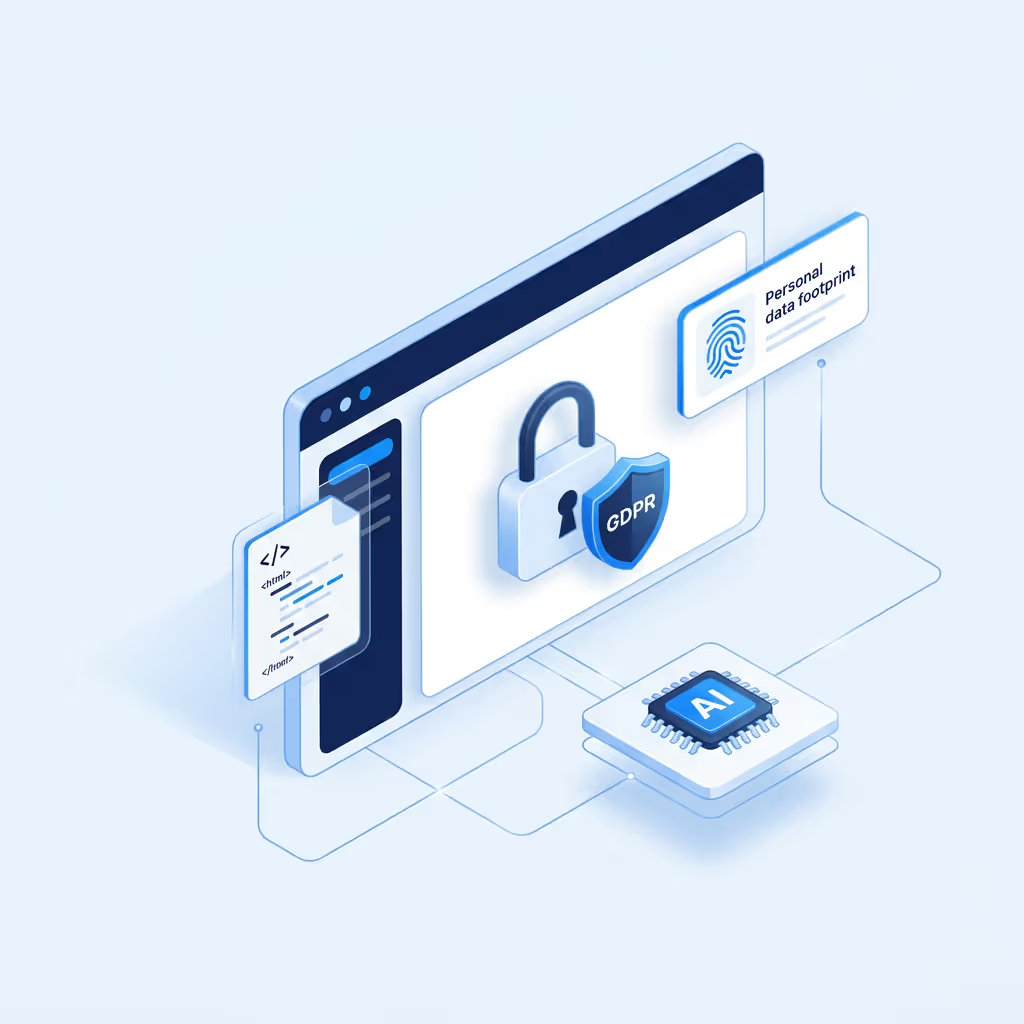
An overview of the opportunities and risks associated with cloud computing for SMEs.
If you would like to engage a lawyer specialising in hosting agreements, contact me!
Understanding the different cloud computing models
Cloud computing relies on the use of remote servers to store, manage and process data over the Internet. For SMEs, this technology comes mainly in three service models, each meeting specific needs:
Software as a Service (SaaS) offers applications that can be used directly through a web browser, with no installation on user workstations. This turnkey solution provides access to professional software (CRM, accounting, emailing, etc.) in exchange for a monthly subscription, thereby avoiding significant investment in licences.
Platform as a Service (PaaS) provides a complete environment to develop, test and deploy applications. This solution is aimed at SMEs that wish to create their own applications without managing the underlying infrastructure.
Infrastructure as a Service (IaaS) offers fundamental IT resources (servers, storage, networks) on demand. This model suits companies wishing to outsource their infrastructure while retaining control over their operating systems and applications.
Understanding these different models is essential in order to choose the solution suited to the company's needs and to anticipate the specific legal implications of each configuration.
The economic and strategic benefits for SMEs
Adopting cloud computing offers many benefits for SMEs, which explains its growing success:
Cost reduction is often the primary motivation. By turning heavy investments (CAPEX) into predictable operating expenses (OPEX), the cloud allows for better financial management. Savings on hardware infrastructure, maintenance and energy can reach 30 to 40% according to several studies.
Flexibility and scalability represent a major advantage. Resources can be scaled up or down according to the company's actual needs, making it possible to adapt quickly to fluctuations in activity without over-investing.
Accessibility from any location with an Internet connection promotes remote working and mobility, a considerable advantage in the current context where remote work has become the norm.
Technological modernity is ensured by cloud providers, who continuously update their solutions, allowing SMEs to access cutting-edge technologies without any particular technical effort.
These concrete benefits explain why 65% of European SMEs have already adopted at least one cloud solution, according to the latest Eurostat statistics.
Let's discuss your needs for 15 minutes!
Legal issues not to be overlooked
Despite its many advantages, cloud computing raises significant legal questions that SMEs must address carefully:
The location of data is a central concern. When information is stored in data centres located abroad, it is subject to local laws that may compromise its confidentiality or allow access by foreign authorities. The transfer of personal data outside the European Union is particularly regulated by the GDPR.
The legal classification of the cloud contract is not always obvious and may fall under various legal regimes depending on the services provided. This grey area can complicate the resolution of any disputes.
The protection of personal data imposes specific obligations on companies that outsource its processing. The GDPR generally regards the cloud provider as a processor, but the client company remains responsible for the processing and must ensure that its provider offers sufficient guarantees.
The service levels (SLAs) guaranteed by the provider determine the availability, performance and responsiveness of the service. These commitments must be precisely defined and accompanied by penalties in the event of non-compliance in order to effectively protect the client company.
Adopting a cloud solution requires putting in place a solid hosting agreement to protect your data and clarify the responsibilities of each party.
The essential contractual clauses to watch out for
In light of the legal risks identified, certain contractual clauses deserve particular attention when negotiating with a cloud provider:
Reversibility represents a crucial yet often overlooked issue. This clause must specify the technical and financial conditions for retrieving the data in the event of a change of provider or re-internalisation. Without a clear provision on this point, the company risks excessive dependence on its provider, commonly referred to as "lock-in".
The confidentiality of the data entrusted to the provider must be the subject of firm commitments, including appropriate technical and organisational measures. Access to data by the provider's staff must be strictly controlled.
The security guarantees offered by the provider must be explicit and cover all identified risks (intrusions, data leaks, technical failures). Compliance with recognised standards such as ISO 27001 is a relevant indicator of the level of security.
Subcontracting by the main provider must be regulated, or even subject to prior authorisation. Indeed, many cloud providers themselves rely on other players, creating a chain of responsibility that it is essential to master.
The term and termination conditions must preserve the client company's flexibility while ensuring sufficient stability. Early-termination penalties deserve careful negotiation.
I want reliable legal documents!
Strategies to legally secure your transition to the cloud
To enjoy the benefits of the cloud while limiting legal risks, SMEs can deploy several strategies:
Carrying out a preliminary audit of the data and applications to be migrated makes it possible to assess their sensitivity and determine the applicable legal requirements. Certain particularly critical information may be kept in a private or hybrid environment.
Favouring European providers or those with data centres located in the European Union considerably simplifies GDPR compliance and limits the risks associated with international data transfers.
Negotiating customised contracts rather than accepting standardised general terms makes it possible to tailor the contractual provisions to the company's specific needs. This approach is particularly important for critical applications.
Putting in place internal cloud governance that clearly defines the responsibilities and decision-making processes relating to the use of cloud services. This organisation limits the risk of non-compliant rogue deployments.
Taking out suitable cyber insurance that specifically covers the risks associated with outsourcing to the cloud usefully completes the protection framework.
The sector-specific considerations to take into account
Certain sectors of activity are subject to specific regulatory constraints that directly affect the use of cloud computing:
The financial sector, governed by regulations such as MIFID II or the recommendations of the ACPR, must comply with particular requirements regarding business continuity and the oversight of essential providers.
The healthcare field imposes strict rules for hosting health data, requiring the use of certified hosting providers (HDS) where patient data is involved.
Local authorities and public bodies must comply with specific public procurement rules and follow the ANSSI's recommendations on digital security.
These sector-specific constraints must be incorporated from the design phase of the cloud project to ensure its regulatory compliance.
The cloud: an opportunity to seize with the right legal safeguards
Cloud computing offers SMEs unprecedented prospects for modernising and optimising their information systems. The economic and operational benefits are considerable, but they must not overshadow the legal issues associated with this transformation.
An informed approach, combining a fine understanding of business needs, a rigorous assessment of the available offerings and careful negotiation of the contractual provisions, makes it possible to take full advantage of these technologies while preserving the company's legal security.
In a constantly evolving digital environment, mastering the legal aspects of cloud computing is now a competitive advantage and a factor of resilience for ambitious SMEs.
To learn more
What are the benefits of cloud computing for an SME?
Cloud computing offers SMEs agility and efficiency by providing on-demand access to IT resources. It transforms the management of data and applications, without heavy hardware investment. This model nevertheless raises legal questions that need to be mastered.
What are the different cloud computing models?
Cloud computing comes mainly in three models: SaaS (applications accessible online), PaaS (development platform) and IaaS (infrastructure on demand). Each meets specific needs and presents its own legal implications.
What legal risks does the cloud present for SMEs?
The cloud raises risks relating to data location and transfers, GDPR compliance, security, reversibility and dependence on the provider. Business leaders must master these issues before getting started.
Is the cloud compatible with the GDPR?
The use of the cloud must comply with the GDPR, particularly regarding data location, transfers outside the EU and the classification of the provider as a processor. A contract compliant with Article 28 and appropriate guarantees are necessary to ensure compliance.
Is data location an issue in the cloud?
Yes. Data location and any transfers outside the European Union are sensitive points. Any transfer must be governed by appropriate guarantees, failing which there is non-compliance with the GDPR. This point must be checked before contracting.
What is reversibility in a cloud contract?
The reversibility clause organises the retrieval of data and migration to another solution at the end of the contract. It avoids dependence on the provider and ensures that the SME retains control of its data. This is an essential point of vigilance.
How can an SME secure its use of the cloud?
Securing it involves choosing a reliable provider, a contract governing security, data location, GDPR compliance and reversibility. These precautions make it possible to enjoy the benefits of the cloud while keeping legal risks under control.
Is a lawyer useful for an SME's cloud project?
A lawyer specialising in hosting agreements helps the SME choose the right cloud model, negotiate the contract, govern data transfers and secure reversibility. This support makes it possible to adopt the cloud while keeping legal risks under control.
Still have questions?
Our team is available!
Have a question?

Ressources
Aller plus loin



Digital and Distribution Law Attorney, Paris Bar. We secure your contracts, data, and business.
Services
Sectors