
Numerique
B2B SaaS Contract: 4 Essential Legal Documents to Protect Your Solution
Launching B2B SaaS software requires rigorous legal preparation to protect the provider's business and build trust with professional clients. Whether you are a SaaS provider looking to market your solution to companies or a fast-growing start-up, this
Reading time:
6 min
Launching B2B SaaS software requires rigorous legal preparation to protect the provider's business and build trust with professional clients. Whether you are a SaaS provider looking to market your solution to companies or a fast-growing start-up, these four key legal documents are essential to ensure legal compliance and secure your business relationships.
Well-structured legal guidance can make all the difference between a successful project and a business exposed to legal risks.
- Legal Notices
Legal notices are the legal foundation of any B2B SaaS solution. They enable clients to identify the provider and understand its responsibilities, particularly in the event of a dispute.
Key elements to include:
- Identification of the provider: State the company name, full address, the RCS registration number, and contact details (email, phone). This information is mandatory to ensure transparency towards clients and comply with French regulations.
- Liability: Set out the cases in which the provider may be held liable, as well as the exclusions, such as in the event of force majeure or misuse by the client.
- Terms of use: Add a reminder of the usage rights and access restrictions to the platform to avoid misunderstandings.
Penalties for non-compliance: Failure to meet these obligations exposes the provider to financial penalties and significant legal risks. For example, a fine of up to €75,000 for companies in breach.
Concrete example: A SaaS company that fails to specify its responsibilities in its legal notices may face costly litigation with a client who has suffered data loss. This underscores the importance of ensuring full transparency from the outset.
Let's discuss your needs for 15 minutes!
2. Privacy Policy
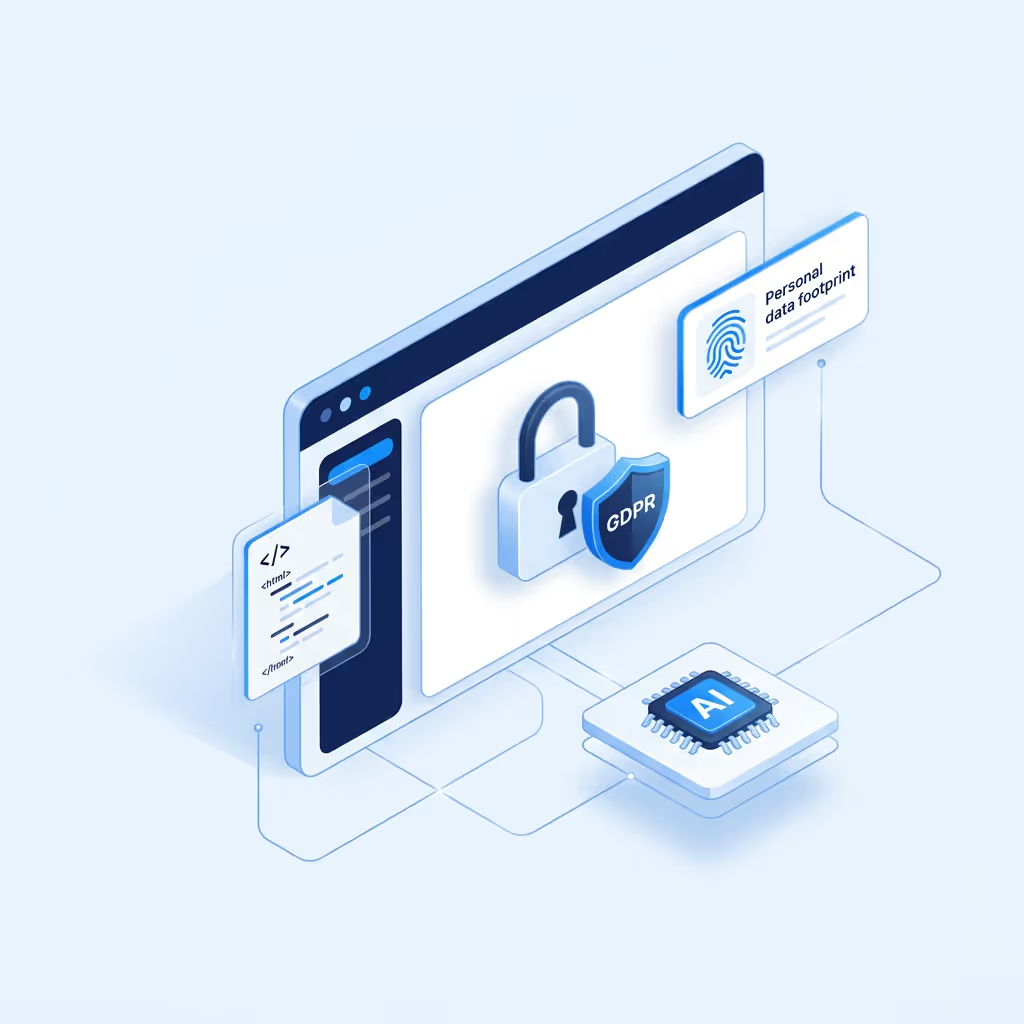
The privacy policy is an essential document for any B2B SaaS provider collecting data, whether from clients or end users. It informs about data collection, storage, and processing practices, while ensuring GDPR compliance.
Key elements to include:
- Data collected: Precisely state the types of data gathered, such as login information, technical data (IP, device identifiers), and identification information (names, emails).
- Purpose of collection: Explain why this data is necessary (for example: secure access, personalization, or usage analysis). State whether any data is used for marketing purposes or shared with third parties.
- Retention period: Specify how long the data will be retained, in line with best practices: the duration of the subscription + 1 year for archiving, for example.
- Users' rights: Inform users of their rights of access, rectification, and erasure, and the procedure for exercising these rights.
GDPR-related penalties and risks: The GDPR imposes strict obligations on SaaS providers. A breach can result in penalties of up to 4% of the company's worldwide turnover.
For example, a French SaaS company was recently penalized for failing to secure user data and to properly inform its clients of their rights.
Practical tip: A clear and comprehensive privacy policy not only reassures your clients but also strengthens the trust of their end users.
3. GDPR Annex (Data Processing Agreement - DPA)
The Data Processing Agreement (DPA) is an indispensable document for B2B SaaS providers processing personal data on behalf of their clients. It clarifies the responsibilities of each party, particularly within the framework of the GDPR, and protects both the provider and the client against legal risks.
Key elements to include in a DPA:
- Sub-processing and liability: Specify the respective roles: the client is the data controller and the provider is the processor. This distinction is crucial to avoid any ambiguity in the event of an audit by the CNIL or a security incident.
- Security measures: Detail the protocols in place: encryption, multi-factor authentication, regular backups, and access controls. These measures meet GDPR requirements and reassure clients about the protection of their data.
- Notification in the event of a data breach: Specify the notification deadline (generally 72 hours under the GDPR) and the steps to follow. This transparency is essential to limit damage in the event of an incident.
Risks and penalties for non-compliance: A poorly drafted or non-existent DPA can expose the provider to heavy penalties in the event of a data leak or a GDPR audit.
For example, a SaaS company that failed to include a compliant DPA was held liable to its clients following a cyberattack, suffering financial losses and reputational damage.
Practical tip: Including a detailed DPA in your SaaS contracts demonstrates your commitment to data protection and reassures your professional clients about your GDPR compliance.
I want to ensure GDPR compliance for my SaaS software
4. SaaS Contract
The SaaS contract formalizes the commercial relationship between the provider and the client. It defines the responsibilities of both parties, the terms of use, and the warranties offered, while legally securing transactions.
Essential elements to include in a SaaS contract:
- Usage rights: Clearly define the client's access rights (for example, by number of users or type of access). Also include restrictions, such as the prohibition on reselling or sublicensing access to the software.
- Service levels (SLA): Specify availability commitments (e.g., 99.9% annual availability), response times in the event of incidents, and support arrangements (24/7 or business hours). These clauses are crucial to reassure the client and frame your obligations.
- Liability clauses: Limit your liability in the event of failure, data loss, or service interruption. Explicitly state the exclusions, such as in the event of force majeure (cyberattacks, natural disasters).
- Reversibility clause: Guarantee the client the recovery of its data at the end of the contract, in a usable format (for example, CSV or XML). Also specify the terms, such as the deadlines and any costs associated with migration.
Concrete example: A SaaS provider won a tender thanks to a clear contract incorporating detailed SLAs and a comprehensive reversibility clause. This strengthened the client's confidence in the reliability and flexibility of the service.
Practical tip: A well-drafted SaaS contract not only protects the provider but also serves as a commercial argument to persuade your prospects and secure your long-term relationships.
***
Protecting your B2B SaaS business requires rigorous legal preparation and documents tailored to your needs. Legal notices, the privacy policy, the DPA, and the SaaS contract are not merely legal obligations: they are essential tools to secure your business and strengthen the trust of your professional clients.
Don't wait until a dispute or a GDPR audit puts your business at risk. Contact a legal expert for a complete audit of your documents or to assist you in drafting them.
We have helped more than 10 SaaS providers secure their businesses through compliant contracts and documents tailored to their needs.
➡️ Contact us today to ensure the compliance and legal security of your B2B SaaS software.
To learn more
Which legal documents are needed to launch a B2B SaaS?
Four documents are essential: the legal notices, a GDPR-compliant privacy policy, the general terms and conditions (of use and of sale), and the service level agreement. Together, they secure the provider's business, build trust with professional clients, and ensure the legal compliance of the solution.
Why are legal notices the foundation of a B2B SaaS?
They enable clients to identify the provider (name, address, RCS, contact) and to understand its responsibilities, particularly in the event of a dispute. They also specify the cases of liability and the exclusions (force majeure, misuse). Their absence exposes the provider to penalties and undermines the relationship of trust with professional clients.
What should the privacy policy of a B2B SaaS contain?
It must state the data collected (login, technical data, identification), the purpose of the collection, the retention period, and users' rights. GDPR-compliant, it informs about collection, storage, and processing practices. A breach can cost up to 4% of worldwide turnover.
Is a B2B SaaS provider responsible for its clients' data?
When it processes data on behalf of its professional clients, the provider is a processor within the meaning of the GDPR and must comply with the obligations of Article 28. If it uses the data for its own purposes, it becomes a data controller. The classification, and therefore the obligations, depend on the actual use of the data.
Why does a B2B SaaS need solid general terms and conditions?
The general terms and conditions govern access to and use of the platform, the mutual obligations, the service levels, and the financial terms. For a SaaS sold to companies, they structure the commercial relationship, limit disputes, and protect the provider. They must be tailored to the actual model of the solution.
What does a SaaS provider risk without compliant legal documentation?
It is exposed to costly litigation (for example, in the event of a client's data loss), to fines for GDPR non-compliance that can reach 4% of worldwide turnover, and to a loss of trust from professional clients. Legal rigor often makes the difference between a sustainable project and a business exposed to risk.
Is a service level agreement necessary for a B2B SaaS?
Yes. Professional clients expect measurable commitments: availability, support, recovery time. The SLA formalizes these service levels and the consequences in the event of a breach. It is a structuring document for a B2B SaaS, as it determines client satisfaction and risk management for the provider.
Why seek guidance for the documentation of a B2B SaaS?
Because these four documents must be consistent with one another and tailored to the reality of the solution: business model, data processing, responsibilities. Structured legal guidance secures commercial relationships, ensures compliance, and protects the provider against the legal risks inherent in marketing a SaaS to companies.
Still have questions?
Our team is available!
Have a question?

Ressources
Aller plus loin

Digital and Distribution Law Attorney, Paris Bar. We secure your contracts, data, and business.
Services
Sectors